
Why Your Brand Needs a Trademark (Before Someone Else Takes It)
You have spent months refining your product, designing the perfect logo, and building trust with your early customers. Then, out of nowhere, another company begins selling similar goods under a nearly identical name. Without a registered trademark, defending your hard-earned reputation can turn into an expensive, uphill legal battle.
Building a business without protecting your brand is like building a house without locking the front door. Here is what every founder and creator needs to know about trademarks.
What Exactly Is a Trademark?
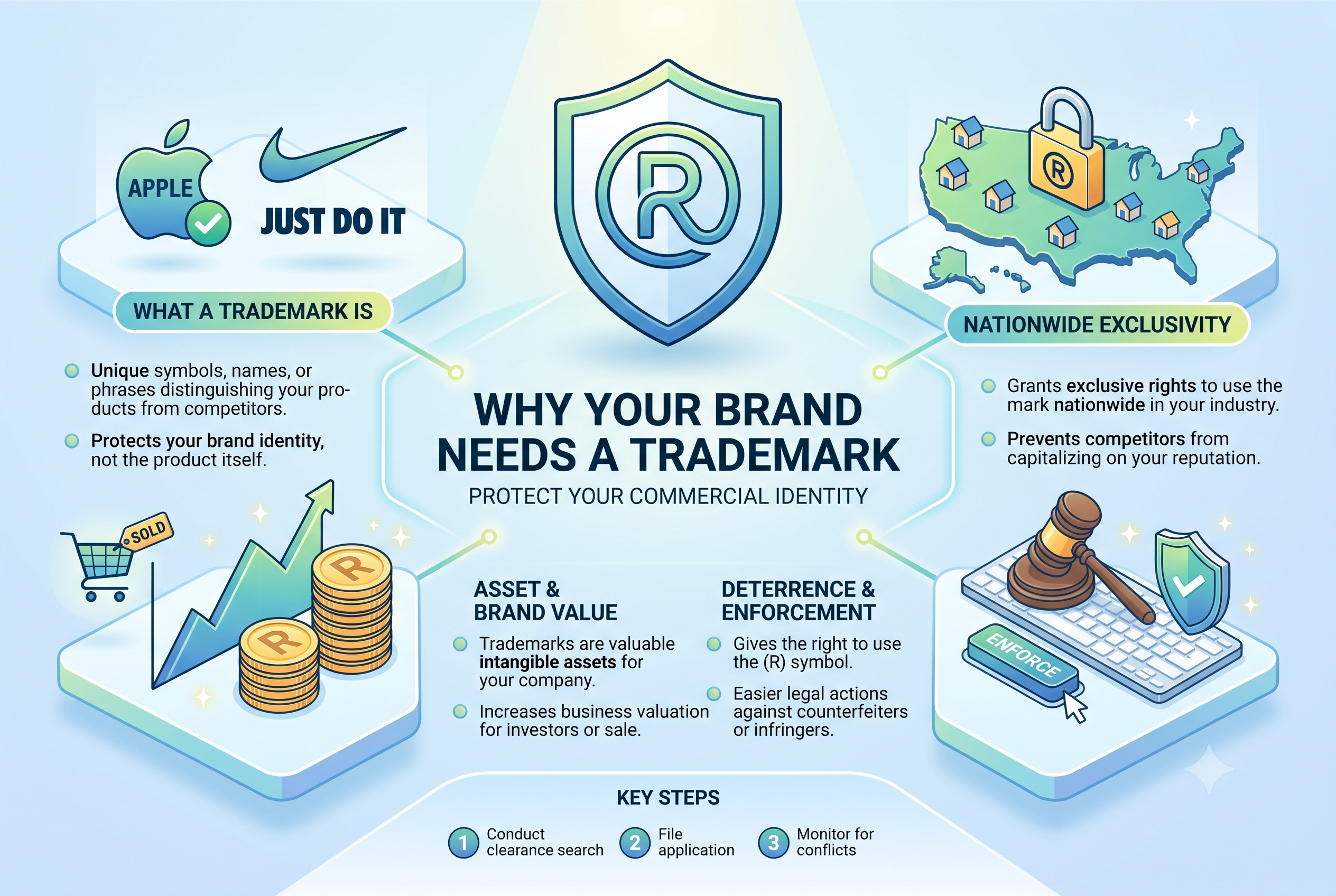
A trademark is any recognizable sign, design, phrase, or symbol that identifies your products or services and distinguishes them from competitors.
- Trademarks vs. Copyrights vs. Patents: While a patent shields an invention (like a new engine mechanism) and copyright protects original creative works (like books, code, or music), a trademark protects your commercial identity—your brand name, logo, slogan, or distinctive packaging.
Think of Apple’s bitten apple icon, Nike’s “Just Do It,” or Coca-Cola’s dynamic ribbon. These assets immediately communicate quality and origin to consumers.
Why Registering Early Matters
Many entrepreneurs assume that buying a domain name or registering a business entity (like an LLC) secures exclusive rights to the name. It does not.
Registering a trademark with your national trademark office provides critical advantages:
- Nationwide Exclusivity: Registration grants you the presumption of ownership and the exclusive right to use the mark nationwide in connection with your registered classes of goods or services.
- Deterrence and Enforcement: Once registered, you earn the right to use the registered symbol (®) rather than just ™. This puts competitors on notice and gives you leverage to issue takedown notices or pursue statutory damages in court.
- Asset Value: A registered trademark is an intangible asset. If you ever seek venture capital, apply for bank financing, or sell your company, protected intellectual property significantly increases company valuation.
The 3 Rules for Choosing a Strong Mark
Not all marks receive legal protection. Trademark offices evaluate distinctiveness on a sliding spectrum:
- Fanciful or Arbitrary (Strongest): Invented words (like Kodak or Xerox) or real words applied to unrelated products (like Apple for computers) receive the highest level of legal protection.
- Suggestive (Good): Words that hint at a product’s benefit without outright describing it (like Netflix for video streaming) are protectable and commercially appealing.
- Generic or Descriptive (Weakest): Words that merely describe what you sell (like Best Coffee for a coffee shop) cannot be registered as trademarks.
Secure Your Name Today
Conduct a comprehensive clearance search across trademark databases before committing to signage, packaging, and marketing collateral. Protecting your mark early costs a fraction of the price of a forced rebrand later. Your brand identity is the face of your business—make sure you truly own it.
